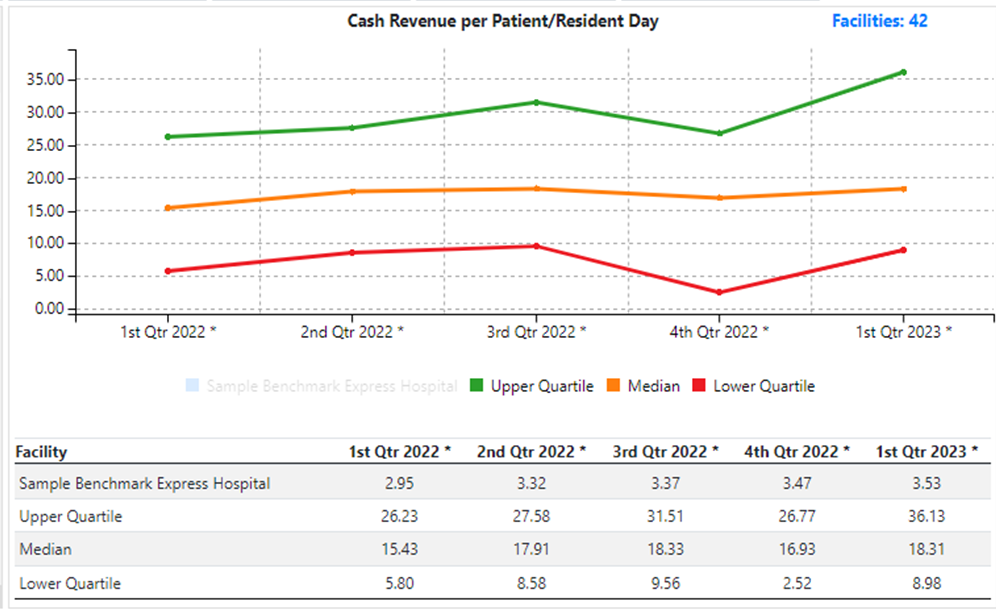
Revenue per patient, or resident, day presents an opportunity to show hospital and senior living leadership the impact that visitors, residents, and patient volume can have in a strong retail operation.
Often times the impact of a high census or a high daily outpatient visit count may be overlooked or underestimated in impact. A pediatric facility, for example, may see higher retail transactions versus a smaller community type hospital.
A 2021 article 3 Ways Children's Hospitals Are Different Than Their Adult Counterparts published by the Children’s Hospital Association states “families are at the center of care efforts - beyond the logistics and legal stewardship that families manage, pediatric patients need their family around them, and this requires more family-centered spaces across all patient care areas. These spaces include sleeping areas for parents, secured storage areas, lounges and laundry facilities. There are often more visitors for each pediatric patient, which means children's hospitals require larger corridors and higher traffic flow capacity.”
While this specific example may only apply to a pediatric facility, this benchmark may provide an opportunity for all types of hospitals and resident communities to validate their full-time employee (FTE) count due to these obvious reasons – more traffic flow equals more sales which, hopefully, translates to higher revenues for the facility. An additional benefit of more sales, higher revenue scenario is an increase in total purchases. While at first this may seem like simply an expense in the eyes of administration, the positive outcome is maximizing your rebates through higher utilization. Being able to maximize program savings shows additional value and opportunities to offset the expense.
All hospital foodservice and senior living operations have an opportunity to look at retail sales and possibly capture employee transactions versus visitor transaction to paint a picture for their administrators on the impact of higher visitor counts on their retail operation.
For hospitals, another way to explain the importance of revenue per patient day is through a guest tray program. If a hospital is able to charge or is already charging for guest trays this can be a factor in revenue per patient day. Many times, a family member may not wish to leave the bedside of their loved one and having the ability to provide a bedside meal at a minimal cost to a visitor could boost your revenue stream and help a foodservice operator hold on to those cherished FTE’s and hourly staff.
The AHF benchmarking platform offers a variety of ways to showcase the importance of a strong foodservice program. It can provide unit operators with information to make informed decisions, highlight strong performance in particular areas and provide our senior leaders with data that is easily consumed. The takeaway from all of this is that we have a variety of tools in our toolbelt, do not dismiss any of them until you fully understand the picture it can paint for your operation.
---
AHF's Benchmarking ExpressTM program offers operators with real time tracking of more than 30 KPIs and personal data tracking. Learn more and start benchmarking today to gain access to our powerful free tool. Our data can help you improve your operations and justify value, FTEs, and more to your administrators. Don't miss out!
---
Article by AHF Benchmarking Committee Member Curtis Melhorn, Johns Hopkins All Children's Hospital